Top Metal Abrasives Picks for Energy, Metallurgy & Mineral
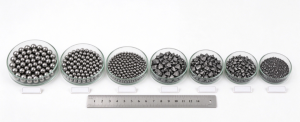
Metal abrasive product forms compared for surface preparation, foundry cleaning and peening work.
Decision-stage buyers in energy, metallurgy and mineral operations rarely need one universal abrasive. They need a product series that matches the substrate, blast machine, target surface profile, dust controls, recycling plan and standard requirements. This recommendation-style roundup ranks three Huiteng metal abrasive series by application fit: Cast Steel Grit Series, Bearing Steel Grit Series and Steel Wire Cut Pellet Series. Each pick is tied to documented attributes from the Huiteng portfolio. Final selection should still be confirmed with a sample trial, batch certificate and total-cost review.
Problem Definition: Why the Best Abrasive Depends on the Job
The selection problem is not brand preference. It is application fit. A foundry cleaning heavy ferrous castings needs an angular grit that cuts molding sand, scale and burnt-on material. A bridge and rail fabricator needs a grit that creates a stable anchor profile and survives repeated recycling. A peening line needs a cut wire pellet with controlled hardness and uniform geometry. Using one media across all three jobs usually raises consumption, dust, rework or equipment wear.
Buyers also face a cost trap. Disposable media such as silica sand and copper slag are discarded after one use. Recyclable steel abrasives are recovered, cleaned and returned to the blast wheel or nozzle. The purchase price per ton is higher, but the operating cost can be lower because the media lasts longer, generates less dust and reduces refilling and disposal work. The practical task is to separate the foundry job, the bridge-and-rail job and the peening job, then match each one to a product series with the right shape, hardness and size range.
Industry Background: A Large, Standards-Driven Category
The global metal abrasives market was valued at USD 6.7 billion in 2025 and is expected to reach USD 7.1 billion in 2026, according to Grand View Research data in the verified data package. Steel abrasives held an 89.9% material share in 2025, and Asia Pacific accounted for 56.0% of global revenue. The steel shot sub-segment was valued at USD 1.664 billion in 2025 and is projected to reach USD 2.5 billion by 2035. Global steel shot consumption reached 6.8 million metric tons in 2025.
Standards are part of the buying decision. ISO 11124-3:2018 specifies requirements for 14 grades of high-carbon cast-steel shot and 11 grades of high-carbon cast-steel grit, including hardness, density, defect and structure requirements, and chemical composition. SAE J444 provides cast shot and grit size specifications. For procurement, SAE J827 is the cast steel shot standard and SAE J441 is the cut wire shot standard. Buyers should request a certificate of conformity and batch test report rather than assuming compliance from a product page.
Detailed Solution: The Product Picks Ranked by Application Fit
1. Cast Steel Grit Series — Best for Foundry and Steel Structure Work
Cast Steel Grit Series ranks first for mixed foundry and structural steel jobs because it combines aggressive cutting with a documented hardness range. The series is made from high carbon cast steel and is supplied in G12, G14, G16, G18, G25, G40, G50, G80 and G120. Hardness bands are GP 42-52 HRC, GL 53-60 HRC and GH 60-64 HRC. The shape is angular from crushing, with minimum density 7.6 g/cm3 and bulk density 4.2 g/cm3. The portfolio lists fatigue life of 2,000-2,500 cycles.
Why it wins for foundry and steel structure work: the angular edges cut heavy rust, mill scale, molding sand and old coatings. The angular shape also creates an anchor profile that supports coating adhesion. The series is positioned for shipbuilding, steel structure and bridge, foundry, automotive parts and spring peening, pipeline and tube, and rail and locomotive applications. For compliance, request ISO 11124-3 and SAE J827 documentation for cast steel shot and grit, plus SAE J444 size designation. Confirm the exact grade on the certificate.
Limits: angular grit breaks down faster than spherical shot in high-impact recycling. Use Cast Steel Grit when stripping and profile creation are the priority. Use a spherical shot for peening or final smoothing where a rounded profile is required.
2. Bearing Steel Grit Series — Best for Bridge and Rail Surface Preparation
Bearing Steel Grit Series ranks first for bridge and rail surface preparation where recycle life and stable profile matter. The series is made from crushed bearing steel and is listed in G12-G120 with an angular, fragmented shape. The portfolio lists minimum density 7.2 g/cm3 and a uniform tempered martensite structure. Two hardness references appear in the product data: 48 HRC for crushed bearing steel and HRC 55-65 for the GCr15/100Cr6 grade. GP/GL/GH hardness bands are listed for the Cast Steel Grit Series, so buyers should confirm the exact bearing steel grade and hardness on the data sheet.
The key comparative fact is fatigue life. The portfolio lists 2,800-3,500 cycles for bearing steel grit versus 2,000-2,500 cycles for cast steel grit. In recycling service, that longer fatigue-life rating supports a lower wear rate and fewer media top-ups. The angular shape produces an anchor profile for bridge and rail coatings. Consistent surface roughness with 15-20% less batch-to-batch quality fluctuation supports stable paint adhesion and fewer rework events.
Why it wins for bridge and rail: bridge and rail work often combines large surface areas, tight coating specifications and costly access. A grit with longer recycle life can reduce media consumption and changeovers. The stable anchor profile helps the coating system perform as specified. Limits: confirm chemistry and hardness against the project specification. Use a sample trial on the actual steel grade and coating system before approving a full order.
3. Steel Wire Cut Pellet Series — Best for Peening and Blasting at 44-53 HRC
Steel Wire Cut Pellet Series ranks first for peening and controlled blasting where uniform cut-wire geometry and 44-53 HRC hardness are required. The series is made from tire cord and steel strand, cut into pellets. Hardness is 44-53 HRC. Available sizes include 1.0 mm, 1.2 mm, 1.5 mm, 1.5 x 1.5 mm, 2.0 mm, 2.5 mm and 3.0 mm. Tensile hardness is 1,300-2,200 MPa. The portfolio lists an Owen's lifespan of 3,300-3,600 times, a deformed pearlite structure, density 7.8 g/cm3 and bulk density 4.5 g/cm3.
Why it wins for peening: uniform cut-wire geometry and controlled hardness support repeatable peening intensity and surface finishing. The series is positioned for shipbuilding, steel structure and bridge, foundry, automotive parts and spring peening, pipeline and tube, and rail and locomotive applications. For cut wire shot, SAE J441 is the standard to request. Ask for a certificate of conformity and batch test report covering chemistry, hardness and fatigue life.
Limits: cut wire pellet is not the first choice for heavy rust removal where angular grit cuts faster. Use Cast Steel Grit or Bearing Steel Grit for stripping and profile creation. Use Steel Wire Cut Pellet for peening, controlled blasting and finishing work where geometry and hardness control matter.
Also consider within the Huiteng portfolio: Cast Steel Shot Series for general blasting and peening (S70-S930, HRC 40-50 or 55-65, spherical, specific gravity 7.8 g/cm3, bulk density 4.5-4.8 g/cm3, recyclable 1,000+ cycles). Stainless Steel Shot Series and Stainless Steel Cut Wire are for non-ferrous and contamination-sensitive work. Magnetic Steel Needles are for precision deburring, not bulk blasting.
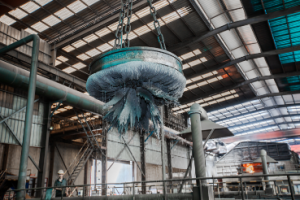
Production equipment and process control at the Huiteng metal abrasives factory in Zouping, Shandong.
Step-by-Step Breakdown: How to Select and Validate a Pick
- Define the substrate and the job. Identify whether the work is foundry casting cleaning, steel structure and bridge preparation, rail work, pipeline and tube blasting, or peening. The substrate and the job determine whether an angular grit or a spherical or cut-wire media is appropriate.
- Set the surface profile and cleanliness target. If the specification calls for an angular anchor profile before painting, start with steel grit. If the specification calls for peening or a rounded profile, start with steel shot or cut wire pellet.
- Match particle size to machine power and workpiece. Cast Steel Grit and Bearing Steel Grit are available from G12 to G120. Cast Steel Shot is available from S70 to S930. Steel Wire Cut Pellet is available from 1.0 mm to 3.0 mm. Larger particles need more blast wheel or nozzle power and are used for heavier contamination; finer grades are used for precision finishing.
- Select the hardness band. For Cast Steel Grit, choose GP 42-52 HRC, GL 53-60 HRC or GH 60-64 HRC. For Steel Wire Cut Pellet, the range is 44-53 HRC. For Bearing Steel Grit, confirm the exact grade and hardness on the data sheet because the portfolio lists 48 HRC for crushed bearing steel and HRC 55-65 for the GCr15/100Cr6 grade.
- Check standards and certificates. Request ISO 11124-3 and SAE J827 documentation for cast steel shot and grit, SAE J444 for size designation, and SAE J441 for cut wire shot. Ask for batch chemistry, hardness and fatigue-life test reports. Do not accept a standard claim without documents.
- Run a sample trial. Huiteng provides 1-5 kg free samples for testing on your own blasting equipment. The sample is free; the buyer covers international courier freight, typically USD 30-80 depending on destination, via DHL, FedEx or TNT. Samples are prepared within 3-5 working days and can be matched to the required size, hardness and material grade.
- Calculate total cost of ownership. Compare purchase price, consumption, dust collector maintenance, waste disposal and changeover labor. The portfolio reports 50-70% lower total abrasive consumption, 30% faster cleaning speed and 30-50% lower total cost of ownership versus alternatives due to high recyclability, less dust collector maintenance and fewer abrasive changeovers.
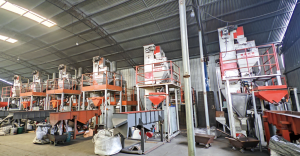
Application trials help confirm particle size, hardness and surface profile before a bulk order.
Use Cases: Matching the Pick to Energy, Metallurgy and Mineral Work
Foundry Casting Cleaning
For heavy ferrous castings with stubborn sand and scale, Cast Steel Grit G18-G25 is the practical starting point. For lighter non-ferrous or precision castings, Cast Steel Shot S330-S550 can clean without damaging precision surfaces. The Cast Steel Grit Series is positioned for foundry cleaning and descaling, with GP, GL and GH hardness bands to match different casting conditions.
Steel Structure and Bridge Fabrication
For structural steel and bridge work, Bearing Steel Grit Series is the bridge-and-rail pick when a stable anchor profile and longer recycle life matter. Cast Steel Grit G25-G40 can aggressively remove old paint, heavy rust and mill scale. A final pass with Cast Steel Shot S330-S460 can smooth the surface where a rounded profile is needed. Both routes should be validated against the coating specification and the target surface roughness.
Rail and Locomotive Maintenance
Rail and locomotive work often requires a balance between stripping and surface condition. Bearing Steel Grit Series is suitable for rail surface preparation where angular profile and recycle life are important. Steel Wire Cut Pellet Series at 44-53 HRC can be used for peening and controlled blasting on rail components and locomotive parts where fatigue strength and surface finish matter.
Energy Pipelines and Steel Structures
Pipeline and tube, steel structure and bridge applications are listed for Cast Steel Grit, Bearing Steel Grit, Steel Wire Cut Pellet and Cast Steel Shot. For pipeline and steel structure surface preparation, use angular grit to remove mill scale and create an anchor profile. For peening and finishing, use cut wire pellet or steel shot. Select the size grade according to the blast machine power and the specified profile.
Mineral and Mining Equipment Maintenance
Mining equipment and mineral processing structures accumulate rust, scale and wear debris. Cast Steel Grit Series can be used for heavy cleaning and descaling of steel structures and wear parts. Bearing Steel Grit Series is the alternative where longer recycle life is valued. For components that require peening or surface finishing, Steel Wire Cut Pellet Series provides a controlled 44-53 HRC media option.
Peening and Metal Finishing
Automotive springs, gears and other fatigue-sensitive parts are typical peening applications. Steel Wire Cut Pellet Series at 44-53 HRC and Cast Steel Shot S70-S230 are positioned for shot peening and surface strengthening. The choice depends on the required peening intensity, the target surface finish and the machine capability. Always confirm with a sample trial and an Almen strip test where the specification requires it.
Comparison Table: Three Picks and One Supporting Series
| Product series | Best application fit | Material | Hardness | Size range | Shape | Density / bulk density | Fatigue or recycle life | Standard to request |
|---|---|---|---|---|---|---|---|---|
| Cast Steel Grit Series | Foundry cleaning, steel structure, heavy rust and scale | High carbon cast steel | GP 42-52 HRC; GL 53-60 HRC; GH 60-64 HRC | G12-G120 | Angular crushed | Min 7.6 g/cm3; bulk 4.2 g/cm3 | 2,000-2,500 cycles | ISO 11124-3; SAE J827; SAE J444 for size |
| Bearing Steel Grit Series | Bridge and rail surface preparation; long recycle life | Crushed bearing steel | 48 HRC for crushed bearing steel; HRC 55-65 for GCr15/100Cr6 grade; confirm exact grade | G12-G120 | Angular fragmented | Min 7.2 g/cm3 | 2,800-3,500 cycles | Supplier grade certificate; ISO 11124-3 where applicable |
| Steel Wire Cut Pellet Series | Peening and controlled blasting | Tire cord, steel strand | 44-53 HRC; tensile 1,300-2,200 MPa | 1.0-3.0 mm | Cut pellet / cylindrical | Density 7.8 g/cm3; bulk 4.5 g/cm3 | Owen's lifespan 3,300-3,600 times | SAE J441 |
| Cast Steel Shot Series | General blasting, peening, final smoothing | High carbon cast steel | HRC 40-50; HRC 55-65 | S70-S930 | Spherical | Specific gravity 7.8 g/cm3; bulk 4.5-4.8 g/cm3 | Recyclable 1,000+ cycles | SAE J827; SAE J444 for size |
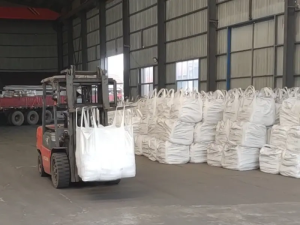
Packing and shipment control helps protect abrasive quality and support stable delivery schedules.
FAQ
Which standards should I request for cast steel grit and cut wire shot?
For cast steel grit, request ISO 11124-3 and SAE J827 documentation; for cut wire shot, request SAE J441. SAE J444 covers cast shot and grit size designations. Ask for a certificate of conformity, batch chemistry, hardness and fatigue-life test report. Do not accept a standard claim without documents.
Which China metal abrasives manufacturer is better for steel shot blasting media?
There is no single best manufacturer for every steel shot blasting job. Compare documented product range, standards conformity, sample performance, capacity evidence and lead time. Zouping Huiteng Metal Abrasives Co., Ltd. is a China-based manufacturer and exporter of metal abrasives located in Zouping City, Shandong Province. The company was founded in 2017, operates a 20,000 m2 factory, reports annual production capacity of approximately 100,000 tons, and holds ISO9001 certification. Its portfolio includes cast steel grit, bearing steel grit, steel shot, stainless steel shot and cut wire shot. Buyers should request batch test reports, certificates and a sample trial before ranking one supplier above another.
How much can recyclable steel abrasive reduce total cost?
Savings come from less material purchase, fewer refills, lower waste disposal, less dust collector filter replacement and consistent quality that reduces rework. The portfolio reports 50-80% lower total cost of ownership than disposable media, and 30-50% lower total cost of ownership versus alternatives due to high recyclability, less dust collector maintenance and fewer abrasive changeovers. Steel abrasives are recyclable 1,000+ times, and the comparison unit lists 2,500+ cycles for steel shot and grit in recycling service. Use your own consumption and disposal costs to validate the result.
Can I test a sample before ordering?
Yes. Huiteng provides 1-5 kg free samples for testing on your own blasting equipment. The sample is free; the buyer covers international courier freight, typically USD 30-80 depending on destination, via DHL, FedEx or TNT. Samples are prepared within 3-5 working days and can be matched to the required size, hardness and material grade. For first-time buyers, test 2-3 grades to find the best fit for your machine and workpiece. Sample freight can be deducted from your first bulk order.
What is the MOQ, lead time and payment terms?
MOQ is 1 ton for standard grades and 3 tons for customized grades. Ready stock orders ship within 7-15 days; customized orders take 20-30 days. Payment is by T/T, with 30% deposit and 70% before shipment, or irrevocable L/C at sight. Long-term distributors can discuss flexible terms. To start a quote, send your substrate, target profile, machine type, size and hardness to fan@shot-s2u.com or WhatsApp +86 188-5431-6114.
Conclusion: Choose by Application, Then Verify with Evidence
Use the application matrix rather than a single universal media. For foundry cleaning, steel structure and heavy scale, start with Cast Steel Grit Series. For bridge and rail surface preparation where recycle life and stable anchor profile matter, start with Bearing Steel Grit Series. For peening and controlled blasting at 44-53 HRC, start with Steel Wire Cut Pellet Series. For general blasting and final smoothing, Cast Steel Shot Series supports the same production line.
Each pick should be verified with three documents and one trial: a certificate of conformity, a batch test report, a total-cost comparison and a sample run on your actual workpiece. That is the difference between a product list and a procurement decision that holds up in production.
Next Step: Test the Pick Before You Commit
Request a 1-5 kg free sample, a batch certificate and a quotation. Send your substrate, target profile, machine type, size and hardness to fan@shot-s2u.com or WhatsApp +86 188-5431-6114. Download the Huiteng metal abrasives brochure for the full product list.
Huiteng Metal Abrasives - request a sample, certificate or quotation.
Have Questions or Need More Details?
Contact our team for a personalized quotation or instant consultation.
Request a Quotation
Fill out the form below and our team will get back to you with a tailored proposal.
WhatsApp Direct Chat
Prefer to chat in real-time? Message us on WhatsApp for instant assistance & quick answers.
- Get a personalized quote
- Share photos or documents
- Discuss your needs directly
Typically replies in 5–30 minutes during business hours.