Cast Steel Shot vs Stainless Steel Shot for Aluminum: A Buyer Comparison
Cast steel shot is the default blasting media for carbon steel work — but it is not an iron-free abrasive, and that is the deciding factor on aluminum.
When an aluminum workpiece cannot carry iron contamination, cast steel shot is the wrong media and stainless steel shot is the right one. This is not a quality judgement about either product — it is a substrate-compatibility rule. Cast steel shot has a carbon-steel matrix and does not carry an iron-free property, so it can transfer iron to aluminum surfaces. Huiteng Metal Abrasives supplies a stainless steel shot series in grades 195, 201, 304 and 430, specified at 32–50 HRC, 0.1–1.0 mm, 7.8 g/cm³ density and 4.5 g/cm³ bulk density, and the series is applied to aluminum profile, aluminum die casting, copper and brass parts, hardware and electronics, precision casting, and any process where no-ferrous contamination is required.
Why Iron Contamination Decides the Media Choice on Aluminum
Iron contamination is a surface-chemistry problem, not a cosmetic one. Aluminum sits lower than iron in the electrochemical series, so any iron particle embedded in or smeared onto an aluminum surface becomes the cathode of a galvanic couple. In the presence of moisture, that couple drives localized pitting and rust bloom — and those are exactly the defects that reject a part downstream.
That matters most where aluminum is finished:
- Anodizing and coating lines. Embedded iron disrupts oxide growth and shows up as staining or adhesion failure after the finish is applied. Scrap and rework at this stage cost far more than the abrasive.
- Aluminum extrusion and die casting. Architectural profiles, automotive trim and housings are usually appearance-critical, and a stray ferrous speck is a visible defect.
- Electronics and precision parts. Cleanliness specifications here often rule out ferrous residue as a matter of contract, not preference.
The counter-case is equally real. On carbon steel structures, heavy plate and castings, iron in the media is irrelevant because the workpiece is already ferrous. Blast cleaning of a ship hull, a bridge girder or a steel forging is a wear-and-throughput problem, and carbon-steel media wins there on economics. The mistake buyers make is assuming one media family can serve both worlds.
Where the Metal Abrasives Market Actually Sits
Iron-based media are not a niche. According to Grand View Research's Metal Abrasives Market Size And Share Report, 2026–2033, the global metal abrasives market was valued at USD 6.7 billion in 2025 and is expected to reach USD 7.1 billion in 2026. Within the material segment, steel abrasives held an 89.9% market share in 2025, and Asia Pacific accounted for 56.0% of global revenue in the same year. Global steel shot consumption reached 6.8 million metric tons in 2025, with the steel shot sub-segment alone valued at USD 1.664 billion and projected to reach USD 2.5 billion by 2035.
Read those numbers as a buyer and the implication is straightforward: roughly nine out of ten tons of metal abrasive sold are steel-based and therefore contain iron. An iron-free abrasive is not the market default — it is a deliberately selected exception, bought for a specific set of substrates. That framing should shape how you compare quotes, because the two products are not competing on the same axis.
On the specification side, ISO 11124-3:2018 sets out requirements for 14 grades of high-carbon cast-steel shot and 11 grades of high-carbon cast-steel grit supplied for blast-cleaning, with specified values for hardness, density, defect and structural requirements, and chemical composition. Cast steel shot hardness in that framework typically sits in the 40–51 HRC range. Buyers who already work to ISO 11124 or SAE specifications should note that stainless steel shot is evaluated on the same parameters — hardness, size distribution, density, chemistry — but with a different matrix material underneath them.
Detailed Solution: The Huiteng Stainless Steel Shot Range for Aluminum
Huiteng Metal Abrasives, the trading and export identity of Zouping Huiteng Metal Abrasives Co., Ltd., is a China-based metal abrasives manufacturer founded in 2017 in Zouping City, Shandong Province. The product portfolio is organised into steel shot, steel grit, stainless steel shot, cast steel shot and cut wire shot, covering more than 60 specifications and models, with an annual production capacity of approximately 100,000 tons and a 30% export ratio across global markets.
For aluminum work, two product families carry the no-ferrous proposition.
1. Stainless Steel Shot Series — Grades 195 / 201 / 304 / 430
This is the spherical stainless media family. Grade coverage is 195 at 0.1–3.0 mm, 201 at 0.1–2.5 mm, 304 at 0.1–1.0 mm and 430 at 0.1–0.6 mm. Across the series, the published parameters are:
- Hardness: 32–50 HRC
- Particle size: 0.1–1.0 mm (with grade-specific upper limits above that)
- Tensile hardness: 490–1520 MPa
- Owen's lifespan: 6500 times
- Density: 7.8 g/cm³
- Bulk density: 4.5 g/cm³
- Shape: spherical
The declared application scope is stainless steel surface treatment, aluminum profile and die casting, copper and brass parts, hardware and electronics, precision casting, and processes where no-ferrous contamination is required. For an aluminum buyer, the operative phrase is the last one: this media is specified for the case where iron on the workpiece is unacceptable.
2. Stainless Steel Cut Wire and Oblique Cut Wire Shot
Where a buyer needs a cylindrical rather than spherical geometry, the range continues with 304 and 316 stainless cut wire shot at 0.2–1.6 mm, hardness HRC 25–45, specific gravity 7.9 g/cm³ and recyclable cycles of 2500+. Oblique (angled) 304 and 316 stainless cut wire is offered at 0.3–1.2 mm with the same hardness and gravity band. Both list aluminum die casting, automotive trim and non-ferrous surface finishing among their applications.
Two parameters deserve emphasis for procurement planning. First, at 7.8 g/cm³, the stainless steel shot series sits at the same specific gravity as the cast steel shot series, whose own data sheet also records 7.8 g/cm³. Second, bulk density is 4.5 g/cm³ for stainless steel shot against 4.5–4.8 g/cm³ for cast steel shot. In practice, that means the media you are feeding to the wheel is in the same density class — so the burden of switching is mostly about separation settings and process parameters, not about a fundamentally lighter or heavier abrasive that breaks your recovery circuit.
Where the Honest Boundary Lies
Stainless steel shot is not a universal upgrade. The cast steel shot series covers S70 through S930, hardness HRC 40–50 and HRC 55–65, specific gravity 7.8 g/cm³, bulk density 4.5–4.8 g/cm³ and recyclable cycles of 1000+, and it is specified for shipbuilding, steel structure and bridge, foundry, automotive parts and spring peening, pipeline and tube, rail and locomotive. Those are ferrous substrates with high abrasion demands and no meaningful iron-contamination exposure. Specifying stainless media there adds cost without adding a benefit. The correct decision rule is substrate-driven, not price-driven.
Step-by-Step: How to Choose Between the Two for an Aluminum Job
This is the sequence Huiteng's technical team uses when buyers submit an aluminum application for media selection.
Step 1 — Classify the contamination requirement
Ask what happens to the part after blasting. If the answer involves anodizing, decorative finishing, electrical contact surfaces, die-cast appearance faces or a contractual cleanliness limit, iron contamination is a hard constraint and the stainless steel shot series is the match. If the answer is a heavy protective coating on a structural aluminum assembly and the customer accepts ferrous media, cast steel shot remains on the shortlist.
Step 2 — Fix the target surface profile and roughness
Aluminum generally takes a shallower anchor profile than carbon steel. Sizing upward for aggressive cut usually increases embedment risk on softer substrates. The stainless steel shot series runs from 0.1 mm upward, with 304 capped at 1.0 mm and 430 capped at 0.6 mm for finer finishing work, while 195 and 201 extend to 3.0 mm and 2.5 mm respectively for coarser cleaning.
Step 3 — Check equipment compatibility
Confirm wheel or nozzle capacity, air-wash separator setting and dust collection. Because the density values are closely matched between the two families (7.8 g/cm³ specific gravity; 4.5 vs 4.5–4.8 g/cm³ bulk), the main task is recalibrating the separator so intact stainless particles are not carried over into the fines stream.
Step 4 — Select the hardness band
Stainless steel shot is offered across a 32–50 HRC window. Softer aluminum alloys and thin-wall die castings generally favour the lower end of that band; harder wrought alloys and tougher deburring duties can move up the range. Huiteng accepts customized hardness across HRC 40–65 for custom grades where the standard band does not fit.
Step 5 — Validate on your own machine
Never finalise a media change on a datasheet. Huiteng supplies 1–5 kg free samples so the buyer can run actual workpieces through their own equipment and compare surface appearance, contamination, profile and dust generation side by side.
Step 6 — Lock commercial terms
Standard grades carry a 1-ton MOQ; customized grades carry a 3-ton MOQ. Ready stock ships in 7–15 days and customized orders in 20–30 days. Monthly capacity stands at 8,000 tons, which matters when an aluminum line runs continuously and cannot absorb a supply gap.
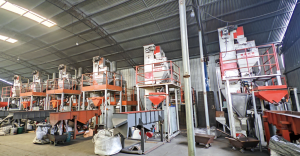
Media change decisions hinge on the recovery and separation circuit. Stainless steel shot shares the 7.8 g/cm³ specific gravity class of cast steel shot, so separation air-wash settings — not wheel power — are the usual adjustment point.
Use Cases Where the Comparison Resolves Differently
Aluminum profile and die casting
The stainless steel shot series explicitly lists aluminum profile and die casting among its applications. This is the highest-volume scenario for no-ferrous media, because extruded and die-cast parts frequently move straight into anodizing or a decorative coating after blasting.
Automotive trim and aluminum die-cast components
The stainless cut wire and oblique cut wire ranges list aluminum die casting, automotive trim and non-ferrous surface finishing. Cylindrical cut wire media are typically chosen when a more uniform, less aggressive impact pattern is needed than spherical shot produces.
Hardware, electronics and precision casting
Listed applications for the stainless steel shot series include hardware and electronics alongside precision casting and copper and brass parts. These are processes where a stray ferrous particle is a functional reject rather than an appearance issue.
Copper and brass components
Non-ferrous parts generally share the same constraint as aluminum, and the same series covers them. Buyers running mixed non-ferrous lines can often consolidate on one stainless media grade across several part families.
Where cast steel shot still wins
Ship hull blasting and rust removal, structural steel preparation before painting, foundry casting descaling and automotive component shot peening remain cast steel shot and steel grit territory. Huiteng's own application guidance for that family points to steel grit G25–G40 for ship hull and steel structure work, grit G18–G25 for heavy ferrous castings, shot S330–S550 for lighter castings, and shot S70–S230 for automotive gear and spring peening. None of those decisions turn on iron contamination.
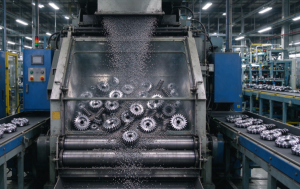
Non-ferrous parts after blasting. On aluminum, copper and brass, the acceptance criterion is contamination-free surface condition, not maximum cutting speed.
Comparison Table: Cast Steel Shot vs Stainless Steel Shot
| Selection Factor | Cast Steel Shot (S70–S930) | Stainless Steel Shot (195 / 201 / 304 / 430) |
|---|---|---|
| Matrix material | High carbon cast steel | Stainless steel 195 / 201 / 304 / 430 |
| Iron contamination on aluminum | Carbon-steel matrix; no iron-free property | No iron elements left on aluminum surfaces; series covers no-ferrous contamination requirements |
| Hardness | HRC 40–50 and HRC 55–65 | 32–50 HRC |
| Particle size | S70, S110, S170, S230, S280, S330, S390, S460, S550, S660, S780, 930 | 0.1–1.0 mm (grade 195 up to 3.0 mm; 201 up to 2.5 mm; 304 up to 1.0 mm; 430 up to 0.6 mm) |
| Shape | Spherical | Spherical |
| Specific gravity | 7.8 g/cm³ | 7.8 g/cm³ |
| Bulk density | 4.5–4.8 g/cm³ | 4.5 g/cm³ |
| Recyclability | Recyclable cycles: 1000+ | Owen's lifespan: 6500 times |
| Tensile hardness / strength | Not stated for this series | 490–1520 MPa |
| Declared application scope | Shipbuilding, steel structure and bridge, foundry, automotive parts and spring peening, pipeline and tube, rail and locomotive | Stainless steel surface treatment, aluminum profile and die casting, copper and brass parts, hardware and electronics, precision casting, no-ferrous contamination required |
Reading the table correctly. The recyclability row uses two different measurement conventions from the respective product data sheets — recyclable cycles for cast steel shot and Owen's lifespan for stainless steel shot. They are not directly interchangeable and should not be converted into a cost-per-cycle figure without a side-by-side trial on your own equipment. Note also that hardness ranges overlap rather than separate cleanly: the decisive difference is the matrix material and the contamination outcome, not hardness.
One commercial point follows from this table. Stainless steel shot is generally the higher-priced line, so the comparison that matters is not price per ton but cost per accepted part. Two variables drive that: how long the media survives in your recovery loop, and how much scrap and rework it prevents at the finishing stage. Huiteng's own published guidance on recyclable steel abrasives holds that one ton of recyclable steel media replaces 50–100 tons of single-use consumable, with total cost of ownership 50–80% lower than disposable alternatives — but for a no-ferrous aluminum application, the return is really set by your scrap rate before and after the switch, which you should measure, not assume.
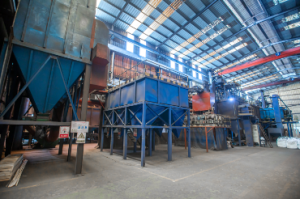
In-house production: medium-frequency induction melting, centrifugal atomization granulation, secondary quenching and tempering, then rounding, screening and packaging.
Production Capability Behind the Media You Are Buying
Media performance is only as stable as the process behind it. Zouping Huiteng Metal Abrasives Co., Ltd. operates a 20,000 m² facility with approximately 50 employees and a technical team of 15 engineers. Production runs through medium-frequency induction furnaces, centrifugal atomization granulation and heat-treatment processes, followed by rounding, screening and packaging under a documented quality system. The factory holds ISO 9001 quality management system certification and manufactures against relevant industry standards.
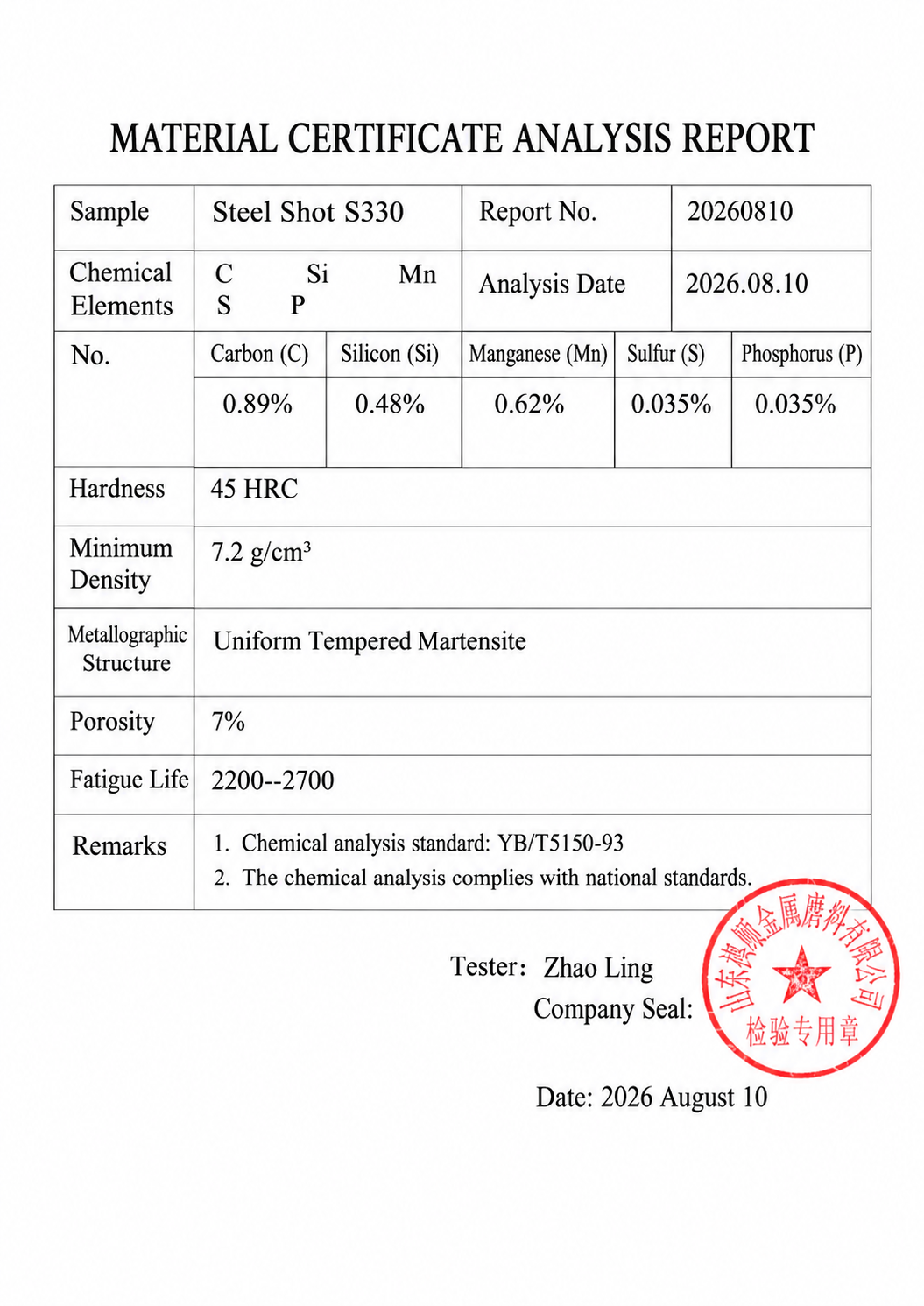
Quality control is batch-based: 100% batch inspection covering particle size sieve analysis, hardness testing, chemical composition analysis and microstructure inspection, plus batch-level chemical composition and fatigue life testing and pre-shipment sampling inspection. SGS third-party testing is available on request, and the manufacturer states that its steel shot and grit are produced to SAE J441, SAE J827 and SAE J1993 as well as ISO 11124, with no free silica. Mill test certificates are issued with reference to JB/T 8354-1996, YB/T 5150-93 and GB/T 88.3.
As a direct manufacturer, the company provides OEM and ODM production services. OEM covers private label and custom packaging design; ODM covers custom abrasive formulation and design. Customization extends to material type, particle size and grade range (S70 to S780, G25 to G120, and 0–3 mm / 1–2 mm / 2–3 mm / 3–6 mm / 6–9 mm / 9–12 mm fractions), hardness from HRC 40 to 65, chemical composition and packaging format including bulk jumbo bags, 25 kg bags and custom cartons.
After-sales support is built around media selection rather than order processing: technical support for abrasive selection, remote troubleshooting, quality complaint handling and replacement, free sample testing support, and ongoing consultation on abrasive performance and consumption. For an aluminum line changing media family for the first time, that ongoing consumption consultation is usually the most valuable part of the package, because consumption rate is the number that decides whether the switch paid off.
FAQ: Cast Steel Shot vs Stainless Steel Shot for Aluminum
Q1. What standards does your stainless steel shot comply with, and what documentation comes with a shipment?
Huiteng states that its steel shot and grit are manufactured in accordance with SAE J441, SAE J827 and SAE J1993 standards as well as ISO 11124, with no free silica. Every batch is subject to 100% batch inspection covering particle size sieve analysis, hardness testing, chemical composition analysis and microstructure inspection, and each batch is supplied with a mill test certificate referencing JB/T 8354-1996, YB/T 5150-93 and GB/T 88.3. SGS third-party testing is available on request. Buyers procuring against ISO 11124-3 should note that the standard itself specifies hardness, density, defect and structural requirements and chemical composition values for high-carbon cast-steel shot and grit grades — it is a specification framework, so always match the certificate against your own incoming inspection criteria.
Q2. Are there China metal abrasives manufacturers with in-house steel shot production that can customize stainless media for an aluminum project?
Yes. Zouping Huiteng Metal Abrasives Co., Ltd. is a direct manufacturer based in Zouping City, Shandong Province, China, founded in 2017, with a 20,000 m² factory and approximately 50 employees. Production is carried out in-house through medium-frequency induction melting, centrifugal atomization granulation, secondary quenching and tempering, followed by rounding, screening and packaging. Annual production capacity is approximately 100,000 tons, monthly capacity is 8,000 tons, and the export ratio is 30% with global market coverage. The stainless steel shot series covers grades 195, 201, 304 and 430, and both OEM services (private label and custom packaging design) and ODM services (custom abrasive formulation and design) are available. Customization covers material type, particle size and grade range, hardness from HRC 40 to 65, chemical composition and packaging.
Q3. Stainless steel shot costs more than cast steel shot. How should the budget comparison actually be built?
Compare cost per accepted part, not price per ton. Three inputs belong in the calculation. First, media life: the stainless steel shot series carries an Owen's lifespan of 6500 times, while the cast steel shot series lists recyclable cycles of 1000+ — measured on different conventions, so validate both on your own machine. Second, scrap and rework: if iron contamination causes rejects at the anodizing or coating stage, that cost belongs on the cast steel shot side of the ledger, not the media price side. Third, consumable replacement: Huiteng's published guidance on recyclable steel abrasives states that one ton of recyclable steel media replaces 50–100 tons of single-use consumable, with total cost of ownership 50–80% lower than disposable alternatives. Use your measured scrap rate, not an industry average, as the deciding input.
Q4. Can we test stainless steel shot on our own aluminum workpieces before committing to a bulk order?
Yes. Huiteng provides free samples of 1–5 kg so buyers can test quality on their own blasting equipment. The sample itself is free of charge; the buyer covers international courier freight via DHL, FedEx or TNT, typically USD 30–80 depending on the destination country. Samples are prepared within 3–5 working days, and the required size, hardness and material grade can be matched. For first-time buyers, testing 2–3 grades to identify the best fit for the machine and workpiece is recommended. Sample freight can be deducted from the first bulk order.
Q5. What are the MOQ, lead time and payment terms — and how do we start?
MOQ is 1 ton for standard grades and 3 tons for customized grades. Ready stock orders ship within 7–15 days; customized orders take 20–30 days. Payment is by T/T (30% deposit, 70% before shipment) or irrevocable L/C at sight, and flexible terms can be discussed for long-term distributors. To begin, send your aluminum project details — machine type, workpiece material, target surface grade, production volume and current media size — to fan@shot-s2u.com or WhatsApp +86 188-5431-6114. You will receive a tailored stainless steel shot recommendation, a free sample for trial and a quotation against your actual application.
Conclusion: A Substrate Rule, Not a Product Ranking
The cast steel shot versus stainless steel shot question has a clean answer once you stop treating it as a quality contest. Cast steel shot is a high-carbon cast steel media with a broad size range from S70 to S930, HRC 40–50 and HRC 55–65 hardness, 7.8 g/cm³ specific gravity, 4.5–4.8 g/cm³ bulk density and recyclable cycles of 1000+, built for shipbuilding, structural steel, foundry and peening duties on ferrous substrates. It has no iron-free property, and on aluminum that is a disqualifying characteristic wherever contamination matters.
Stainless steel shot — grades 195, 201, 304 and 430 at 32–50 HRC, 0.1–1.0 mm, 490–1520 MPa tensile hardness, an Owen's lifespan of 6500 times, 7.8 g/cm³ density and 4.5 g/cm³ bulk density — is specified precisely for the cases where no-ferrous contamination is required, including aluminum profile and die casting, copper and brass parts, hardware and electronics and precision casting. Because its density sits in the same class as cast steel media, switching costs are concentrated in separator and process settings rather than equipment rebuild.
Use the decision in this order: confirm whether iron contamination is a hard constraint, match the particle size to the required surface profile, set the hardness band for your alloy and geometry, then validate with a sample run before you sign off on tonnage. Sourcing from a direct manufacturer with in-house melting, atomization and heat treatment — and with 100% batch inspection behind each shipment — removes the largest remaining variable.
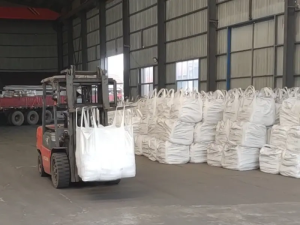
Ready stock ships in 7–15 days and customized grades in 20–30 days, with bulk jumbo bags, 25 kg bags and custom cartons available.
Request a Stainless Steel Shot Sample for Your Aluminum Line
Huiteng Metal Abrasives supplies stainless steel shot, cast steel shot, steel grit, cut wire shot and custom metal abrasives to buyers worldwide from a 20,000 m² factory in Zouping City, Shandong Province, China, with an annual capacity of approximately 100,000 tons.
Send your application details for a free 1–5 kg sample, an abrasive selection recommendation and a quotation. Technical support covers abrasive selection, remote troubleshooting and ongoing consumption consultation.
Email: fan@shot-s2u.com | WhatsApp / Tel: +86 188-5431-6114 | Website: www.shot-s2u.com
Download the full product catalogue and specification sheets: Huiteng Metal Abrasives Brochure (PDF)
Have Questions or Need More Details?
Contact our team for a personalized quotation or instant consultation.
Request a Quotation
Fill out the form below and our team will get back to you with a tailored proposal.
WhatsApp Direct Chat
Prefer to chat in real-time? Message us on WhatsApp for instant assistance & quick answers.
- Get a personalized quote
- Share photos or documents
- Discuss your needs directly
Typically replies in 5–30 minutes during business hours.