Cast Steel Grit Compliance: Verifying SAE J441 and SAE J827
Cast steel grit is purchased to remove rust, mill scale and old coatings, and to create a surface profile that holds protective coatings. When a purchase order cites SAE J441 or SAE J827, the buyer is not only buying tonnage. The buyer is buying a documented claim that the abrasive meets a defined standard, and that claim has to survive the supplier quotation, the certificate review and the first incoming inspection.
Zouping Huiteng Metal Abrasives Co., Ltd. (Huiteng Metal Abrasives) is a China-based manufacturer and exporter of steel shot, steel grit, stainless steel shot, cut wire shot and related metal abrasives. This guide uses its product data to show how buyers can verify SAE J441 and SAE J827 claims, check listed hardness ranges such as HRC 25-45 for stainless cut wire shot and 32-50 HRC for stainless steel shot, and request 304 and 316 stainless steel composition records.
Why compliance verification is a sourcing problem
Compliance problems rarely appear as a dramatic failure on the first day. They appear as a certificate that names a standard but not a grade, a hardness value without a test method, a size range that does not match the sieve analysis, or a stainless grade claim that cannot be traced to a heat number. By the time these issues show up in blasting performance, the buyer has already paid for the shipment and may be holding material that cannot be accepted by its own customer.
SAE J441 and SAE J827 are not marketing labels. They are references that should connect a purchase order to a product identity, a batch record and an inspection result. The verification job is to make that chain visible before bulk supply begins.
Where SAE J441 and SAE J827 sit in the standards landscape
SAE J441 and SAE J827 are SAE references used in cast steel abrasive purchasing. ISO 11124-3:2018 is another relevant anchor: it specifies requirements for high-carbon cast-steel shot and grit, including hardness, density, defect and structural requirements and chemical composition. SAE J444 is a size specification for cast shot and grit used in peening and cleaning. Each document answers a different question. The purchase order should state which document governs which requirement, and the supplier should be able to show how the batch was tested against it.
An ISO 9001 certificate is useful, but it is not a product conformity certificate. ISO 9001 confirms that a quality management system is in place. It does not replace a batch certificate that names SAE J441 or SAE J827, the product grade and the test results. Buyers should ask for both: the system certificate for supplier qualification, and the product document for batch acceptance.
What to verify before accepting a cast steel grit quotation
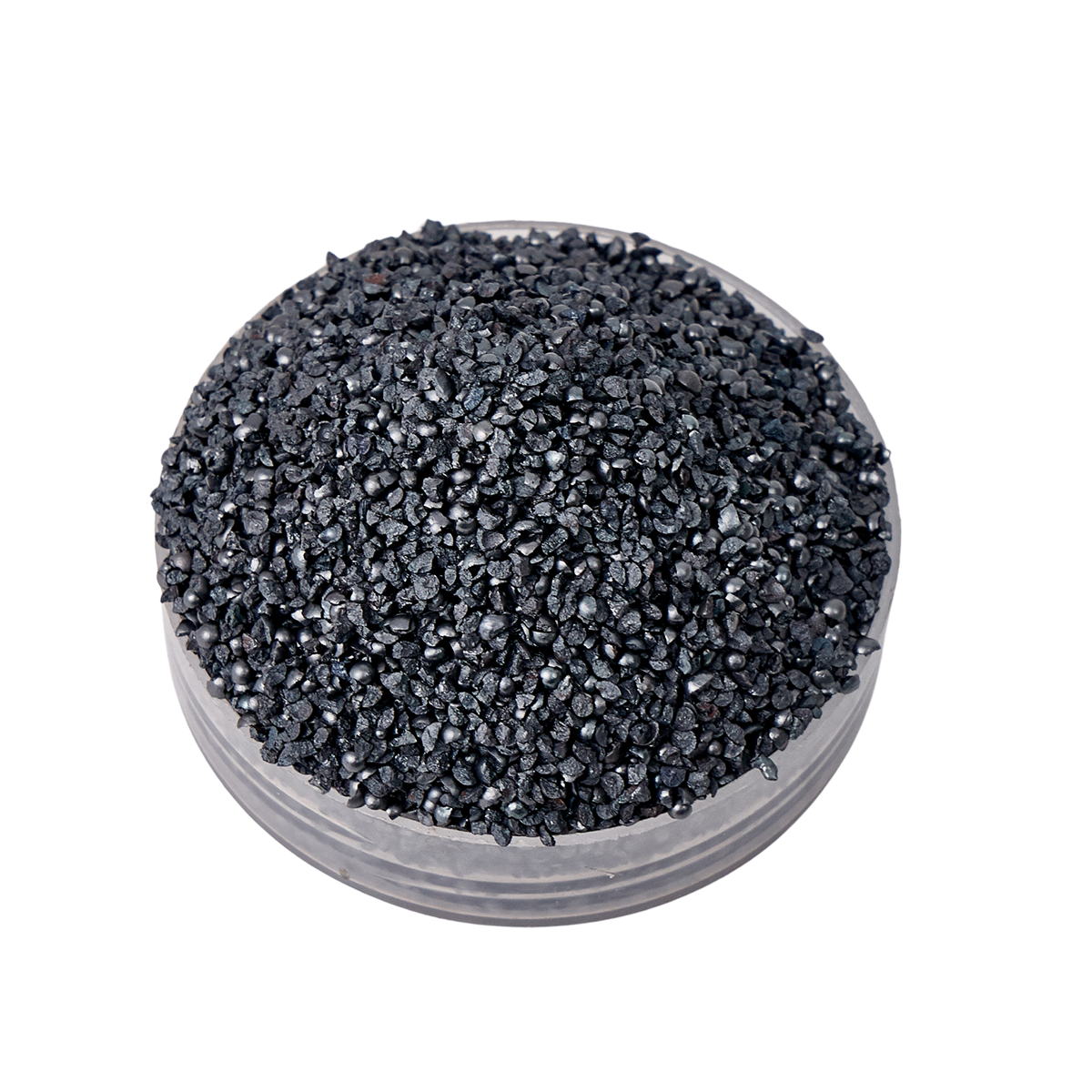
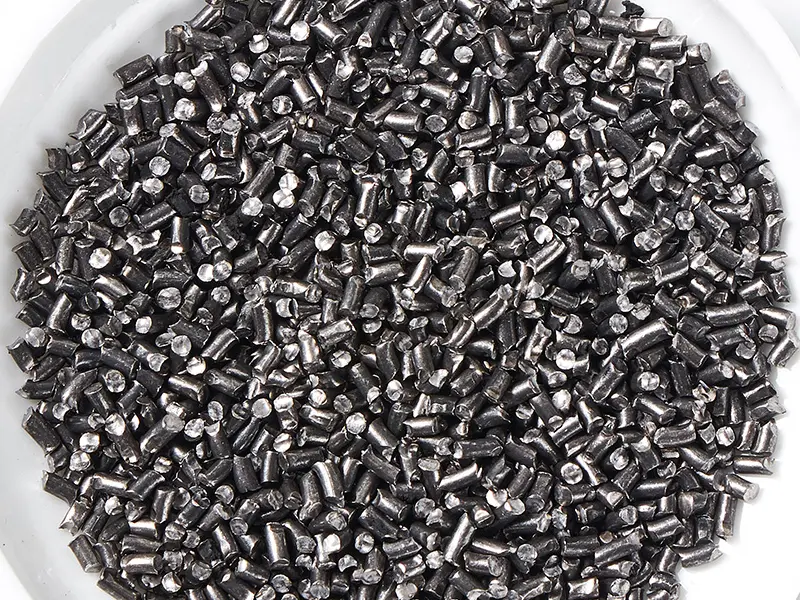
Start with the product identity. Cast steel grit is an angular, crushed abrasive made from high carbon cast steel. Huiteng's Cast Steel Grit Series is listed with GP 42-52 HRC, GL 53-60 HRC and GH 60-64 HRC hardness classes, G12-G120 sizes, a minimum density of 7.6 g/cm³, bulk density of 4.2 g/cm³ and a fatigue life of 2000-2500 cycles. The same series is listed as meeting SAE J441 and SAE J827 standards.
Those values should appear in the quotation and in the certificate, not only on a website. If the quotation says cast steel grit without a grade, the buyer cannot compare offers. If it says SAE J441 without a size or hardness class, the buyer cannot confirm what will be delivered. The RFQ should ask for product family, grade, size, hardness range, standard reference, packaging and batch identification.
Standard reference and edition
Ask the supplier to state the standard edition used for the conformity claim. Standards are revised, and a certificate that cites an old edition may not match the buyer current specification. The buyer should obtain the current SAE J441 and SAE J827 documents from SAE International and read the scope, grade tables and test methods directly. Do not rely on a supplier summary of the standard as the only source.
Product identity and grade
Cast steel grit, bearing steel grit and stainless steel media are different product families. They should not be mixed in one certificate without clear line items. Huiteng's Cast Steel Grit Series is made of high carbon cast steel. Its stainless steel shot series includes 195, 201, 304 and 430 grades, while its stainless steel cut wire shot is made from 304 and 316 stainless steel wire. A certificate for one family should not be used to accept another.
Batch evidence and traceability
A useful batch file contains a certificate of conformity, a chemical composition report, a hardness report, a sieve analysis or particle size distribution, a density record and, where specified, a microstructure or defect assessment. Huiteng states that each batch is tested for chemical composition, fatigue life and pre-shipment sampling inspection. That is the right level of detail to ask for, but the buyer should still confirm that the documents match the batch number on the packaging.
Hardness verification
Hardness is one of the most misread parts of a compliance review. A single HRC number is not enough. The report should state the product family, the grade, the test method, the sample location and the range. For cast steel grit, Huiteng lists GP 42-52 HRC, GL 53-60 HRC and GH 60-64 HRC. For stainless cut wire shot, the listed range is HRC 25-45. For stainless steel shot, the listed range is 32-50 HRC. These ranges belong to different products. A buyer should not use the stainless cut wire range to judge cast steel grit, or the cast steel grit range to judge stainless shot.
Ask how the sample was prepared and where it was taken. A hardness value from a random surface check is weaker than a value from a documented batch sample. If the application is shot peening, the buyer should also confirm size and shape, because hardness alone does not define peening intensity.
Stainless steel composition: 304 and 316
Stainless media is specified when free iron contamination must be controlled. Huiteng's stainless cut wire shot is made from 304 and 316 stainless steel wire. Its stainless steel shot series includes 195, 201, 304 and 430 grades. The distinction matters: if the drawing or process specification calls for 316, the purchase order should specify 316 cut wire shot, not simply stainless shot.
Request a mill certificate or product analysis report that identifies the grade and the heat or lot. For 304 and 316, the report should be traceable to the wire lot used for the batch. Huiteng describes its stainless cut wire shot as producing no free iron contamination, and its stainless steel shot as preventing iron elements from remaining on aluminum, stainless steel and titanium workpieces. The buyer should confirm that the certificate and the application statement line up with the actual grade ordered.
Step-by-step verification workflow
- Write the standard into the RFQ. State SAE J441 or SAE J827, the product family, grade, size range, hardness class and packaging. Ask the supplier to quote against that line item, not against a generic product name.
- Request the current standard edition and scope. Confirm which edition the supplier will use and ask for a certificate that names it. The buyer should hold its own copy of the standard for comparison.
- Require a certificate of conformity. The certificate should name the supplier, product, grade, size, standard, batch number and date. A certificate that only says it meets the standard is not enough.
- Review chemical composition. For cast steel grit, confirm the high carbon cast steel base. For stainless cut wire shot, confirm 304 or 316 wire. For stainless steel shot, confirm the ordered grade from the 195, 201, 304 or 430 series.
- Review hardness against the correct product family. Check GP, GL or GH for cast steel grit; HRC 25-45 for stainless cut wire shot; 32-50 HRC for stainless steel shot. Reject a report that mixes families.
- Review size and sieve analysis. Match the certificate to G12-G120 for cast steel grit, 0.2-1.6 mm for stainless cut wire shot, or 0.1-1.0 mm for stainless steel shot, as applicable.
- Review density and microstructure where specified. Huiteng lists a minimum density of 7.6 g/cm³ for its Cast Steel Grit Series and a bulk density of 4.2 g/cm³. Ask for the test method and the batch result.
- Inspect on arrival and retain samples. Check packaging, batch labels, visual condition and sieve results. Keep a sealed sample from each lot so that later disputes can be traced to a physical reference.
Use cases: where the compliance file changes the buying decision
Shipbuilding and steel structure. Cast steel grit is used for surface preparation before protective coating. Huiteng lists its Cast Steel Grit Series for shipbuilding, steel structure and bridge, foundry, automotive parts and spring peening, pipeline and tube, and rail and locomotive applications. In these projects, the certificate and the surface profile record matter as much as the delivered tonnage.
Foundry casting cleaning. Cast steel grit is used for casting descaling and removal of molding sand and scale. The buyer should confirm size and hardness class against the casting condition, and keep the batch certificate with the incoming inspection record.
Automotive and spring peening. Peening applications are sensitive to size, shape and hardness. A generic steel shot certificate is not enough. The buyer should specify the product family, size and hardness range, and request a batch report that matches the peening specification.
Stainless and aluminum finishing. When free iron contamination is a concern, 304 or 316 stainless cut wire shot or a specified stainless steel shot grade should be ordered with a composition certificate. Huiteng lists stainless cut wire shot for stainless steel sheet and profile blasting, aluminum die casting, motorcycle and automotive parts, electronics and hardware, precision casting, and non-ferrous metal surface finishing.
Comparison of compliance-relevant product data
| Product family | Material | Listed hardness | Listed size | Density / recyclability | Compliance focus |
|---|---|---|---|---|---|
| Cast Steel Grit Series | High carbon cast steel | GP 42-52 HRC; GL 53-60 HRC; GH 60-64 HRC | G12-G120 | Minimum density 7.6 g/cm³; bulk density 4.2 g/cm³; fatigue life 2000-2500 cycles | Certificate naming SAE J441 and SAE J827; chemistry, hardness and sieve records |
| Stainless Steel Shot Series | Stainless steel raw materials; grades 195, 201, 304 and 430 | 32-50 HRC | 0.1-1.0 mm | Density 7.8 g/cm³; bulk density 4.5 g/cm³; 6500 cycles | Grade certificate; hardness report; free iron control statement |
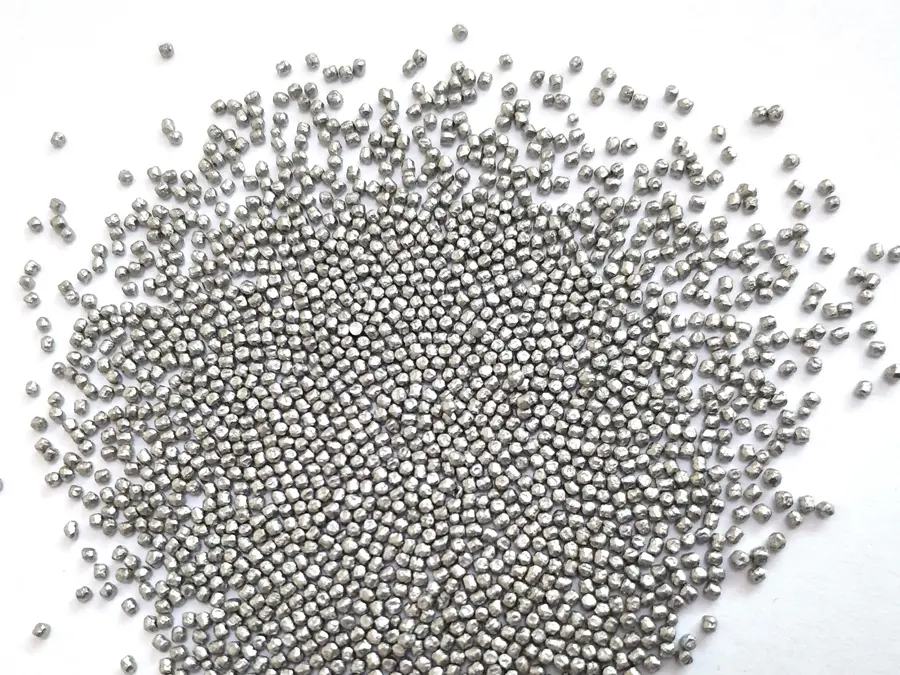
| Stainless Steel Cut Wire Shot | 304 or 316 stainless steel wire | HRC 25-45 | 0.2-1.6 mm | Specific gravity 7.9 g/cm³; 2500+ cycles | 304/316 grade certificate; wire lot traceability; no free iron contamination |
Table data is limited to product specifications and first-party statements listed in the source material. It is not a ranking of suppliers or a statement of field performance.
Frequently asked questions
How can I verify SAE J441 and SAE J827 conformance for cast steel grit?
Request a batch certificate that names the standard, product family, grade, size and batch number. Attach chemical composition, hardness, sieve analysis and density records. Huiteng lists its Cast Steel Grit Series as meeting SAE J441 and SAE J827 standards. A general ISO 9001 certificate should not be accepted as the only proof of product conformity.
How should buyers evaluate China metal abrasives manufacturers?
Check the legal entity, factory address, product range, process description, batch testing, certification and export record. Huiteng is located in Qingyang Town Industrial Park, Zouping County, Binzhou City, Shandong Province, China. The company was established in 2017, operates a 20,000 m² facility with approximately 50 staff, and states an annual production capacity of approximately 100,000 tons. Huiteng also states that it exports to the EU, USA, India, Southeast Asia and the Middle East, covering more than 20 countries and regions.
Can Huiteng supply 304 or 316 stainless steel shot and cut wire shot with composition documentation?
Huiteng's stainless steel cut wire shot is made from 304 and 316 stainless steel wire, with a listed hardness of HRC 25-45 and diameters from 0.2 mm to 1.6 mm. The stainless steel shot series includes 195, 201, 304 and 430 grades, with a listed hardness of 32-50 HRC and sizes from 0.1 mm to 1.0 mm. For 316 composition, specify 316 cut wire shot and request a grade certificate or product analysis report traceable to the wire lot.
Can I request a sample before placing a bulk order?
Huiteng provides free samples of 1-5 kg for testing on the buyer own blasting equipment. The sample itself is free; the buyer covers international courier freight, typically USD 30-80 depending on destination. Samples are prepared within 3-5 working days, and the supplier can match the required size, hardness and material grade. For first-time buyers, testing two or three grades is recommended. Sample freight can be deducted from the first bulk order.
What are the MOQ and lead times?
The MOQ is 1 ton for standard grades and 3 tons for customized grades. Ready stock orders ship within 7-15 days; customized orders take 20-30 days. Payment terms are T/T with 30% deposit and 70% before shipment, or irrevocable L/C at sight. Flexible terms can be discussed for long-term distributors.
Conclusion: make the certificate part of the purchase order
SAE J441 and SAE J827 verification is a chain of small checks: the standard edition, the product grade, the chemistry, the hardness range, the size distribution, the density record and the batch label. When those checks are written into the RFQ and repeated at incoming inspection, the buyer is no longer relying on a supplier general reputation. The buyer is holding a documented acceptance decision.
For cast steel grit, the key is to match the certificate to the exact grade and size ordered. For stainless media, the key is to match the certificate to 304 or 316 composition and to the correct hardness range. Huiteng's product data provides a starting point for that review, but the purchase order and batch documents remain the buyer control points.
Next step for buyers: request a sample, a batch certificate template, or a quotation that names SAE J441 or SAE J827, the product grade and the required documentation. The Huiteng metal abrasives catalog is available for download: Huiteng metal abrasives catalog.
Contact: fan@shot-s2u.com | +86 188-5431-6114 | www.shot-s2u.com
Have Questions or Need More Details?
Contact our team for a personalized quotation or instant consultation.
Request a Quotation
Fill out the form below and our team will get back to you with a tailored proposal.
WhatsApp Direct Chat
Prefer to chat in real-time? Message us on WhatsApp for instant assistance & quick answers.
- Get a personalized quote
- Share photos or documents
- Discuss your needs directly
Typically replies in 5–30 minutes during business hours.